Living With a Mind That Won’t Rest: Understanding Generalized Anxiety Disorder
**This post contains affiliate links. See my full disclosure at the bottom.**
She woke up already tired.
Not the kind of tired that comes from too little sleep, but the kind that settles in the chest before the day has even begun. Her mind was already moving—reviewing yesterday’s conversations, anticipating today’s responsibilities, scanning for anything that might go wrong.
Nothing was technically wrong. Her life looked fine from the outside. But inside, her thoughts felt relentless.
She told herself she was just a worrier. That this was her personality. That she needed to “calm down” or “think positive.”
What she didn’t yet know was that what she was experiencing had a name: Generalized Anxiety Disorder.
What Is Generalized Anxiety Disorder?
Generalized Anxiety Disorder (GAD) is a mental health condition characterized by persistent, excessive worry that feels difficult to control and often spreads across many areas of life—work, relationships, health, finances, or the future in general.
Unlike situational anxiety, which arises in response to a specific stressor, GAD tends to feel constant and free-floating, even when circumstances are relatively stable.
People with GAD often describe it not as fear, but as a mental hum that never turns off.
Clinically, GAD involves:
Excessive worry occurring more days than not for at least six months
Difficulty controlling the worry
Physical symptoms such as muscle tension, fatigue, restlessness, or sleep disruption
Cognitive symptoms including rumination, worst-case thinking, and mental looping
But beyond diagnostic criteria, GAD is an experience of living in a body that rarely feels at ease.
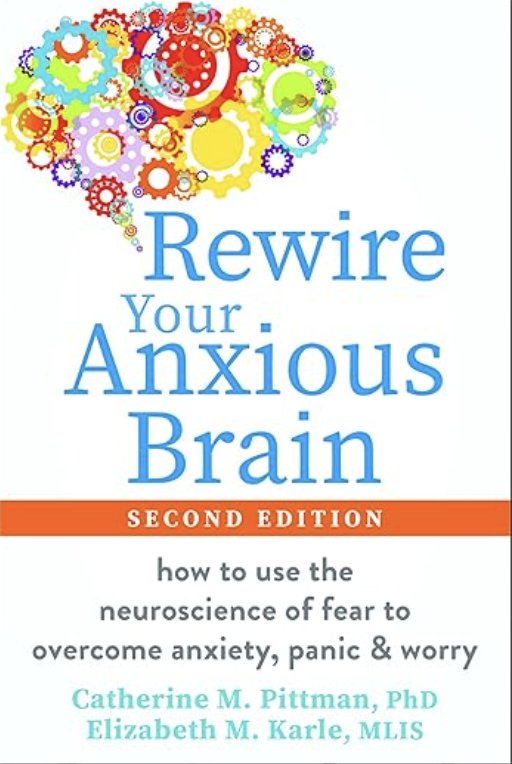
(If you’re interested in learning more about anxiety and practical techniques to help calm it, this book is a great place to start. You can explore it here.)
Why Worry Feels So Convincing
For many people with GAD, worry doesn’t feel irrational. It feels responsible.
Worry can masquerade as preparation, problem-solving, or care. It can feel like the thing that keeps everything from falling apart. Over time, the nervous system learns that staying alert equals staying safe.
The brain becomes skilled at scanning for threat—even when no immediate danger exists.
This is why telling someone with generalized anxiety to “just relax” rarely helps. Their system has learned, often over many years, that vigilance is necessary.
In many cases, this pattern developed early—especially for individuals who grew up in unpredictable environments, took on adult responsibilities too soon, or learned that their needs came second to others’.
The Body’s Role in Generalized Anxiety
Generalized Anxiety Disorder is not just a condition of the mind. It lives in the body.
People with GAD often experience:
Chronic muscle tension (especially in the jaw, shoulders, or neck)
Gastrointestinal discomfort
Shallow breathing
Difficulty falling or staying asleep
A persistent sense of restlessness or irritability
From a nervous system perspective, GAD reflects a system that is frequently stuck in low-grade fight-or-flight. The body prepares for danger that never quite arrives.
Over time, this can be exhausting.
And yet, many people continue functioning—working, parenting, creating—while feeling internally depleted. This is why GAD is often overlooked or minimized, even by those experiencing it.
The Role of Core Beliefs in GAD
At the heart of generalized anxiety are often deeply held beliefs, such as:
If I don’t worry, something bad will happen.
I’m responsible for preventing problems.
Uncertainty is dangerous.
I can’t trust things to work out.
These beliefs aren’t chosen consciously. They’re shaped through lived experience.
Therapeutic approaches like cognitive-behavioral therapies help clients gently examine these beliefs—not to dismiss them, but to understand how they formed and whether they still serve the present moment.
When beliefs begin to shift, worry often softens. Not because life becomes predictable, but because the internal relationship to uncertainty changes.
Why GAD Often Comes With Guilt and Irritability
Many people are surprised to learn that irritability is a common symptom of anxiety.
When the nervous system is constantly activated, patience wears thin. Small frustrations feel bigger. Emotional bandwidth shrinks.
At the same time, individuals with GAD often feel guilty for their anxiety—guilty for being “too much,” for needing reassurance, or for not feeling grateful enough.
This combination of anxiety, irritability, and guilt can create a quiet inner conflict: wanting relief while criticizing oneself for needing it.
Therapy helps normalize this experience and reduce the shame that often keeps anxiety stuck.
GAD and Boundaries
Generalized anxiety is closely connected to boundaries.
Many people with GAD struggle to say no, ask for help, or express limits without significant discomfort. Their worry often extends beyond their own needs to the emotional states of others.
Boundary work in therapy focuses not on becoming rigid, but on helping the nervous system learn that self-protection does not equal danger.
As boundaries strengthen, anxiety often decreases—not because stress disappears, but because responsibility becomes more accurately placed.
How Therapy Helps With Generalized Anxiety Disorder
Effective anxiety therapy addresses both top-down and bottom-up processes.
Top-down approaches (like CPT and CBT) help with:
Identifying unhelpful thought patterns
Challenging catastrophic thinking
Rewriting core beliefs
Bottom-up, somatic approaches help with:
Nervous system regulation
Reconnecting with bodily cues
Increasing tolerance for uncertainty
Together, these approaches support not just symptom reduction, but a deeper sense of internal safety.
Over time, clients often notice:
Less mental looping
Improved sleep
Increased confidence in decision-making
Greater emotional flexibility
The goal isn’t to eliminate anxiety entirely—it’s to reduce its dominance.
Living With Anxiety Doesn’t Mean Living Without Peace
Many people fear that without anxiety, they’ll lose motivation or control. In reality, what often emerges is clarity.
When anxiety quiets, there’s more space to listen—to intuition, values, and genuine desires. Life becomes less about preventing disaster and more about responding to what’s actually happening.
This shift doesn’t happen overnight. But with consistent support, it becomes possible.
Seeking Anxiety Therapy in California
If you’re living in California and struggling with chronic worry, you’re not alone—and support is available. Many therapists now offer telehealth therapy, making anxiety treatment accessible from the comfort of your home.
Working with a trauma-informed therapist who understands both the cognitive and somatic dimensions of anxiety can make a meaningful difference.
A Final Thought
Generalized Anxiety Disorder is not a personal failing. It’s a learned response to a world that once felt unsafe, unpredictable, or overwhelming.
With the right support, your nervous system can learn something new.
It can learn rest.
It can learn trust.
It can learn that you don’t have to carry everything alone.
About the Author
This article was written by a California-based Associate Marriage and Family Therapist offering telehealth therapy for adults experiencing anxiety, overthinking, and trauma-related concerns.
Disclosure: As an advocate for your mental well-being, I only recommend tools and texts I’ve personally vetted. Some links in this post are affiliate links, meaning I earn a small commission on qualifying purchases. This helps support the creation of high-level content for high-achievers like you.