When Boundaries Break Down: How Anxiety Quietly Takes Root
**This post contains affiliate links. See my full disclosure at the bottom.**
She didn’t call it anxiety at first.
She called it being “on edge.”
Being tired.
Being easily irritated by small things that shouldn’t matter as much as they did.
Her phone buzzed, and her chest tightened before she even looked at the screen. A familiar name. A familiar request. Nothing urgent—yet her body reacted as if something terrible were about to happen. She sighed, already rehearsing what she would say, already calculating how to respond without disappointing anyone.
She told herself she was just stressed. Overworked. Sensitive.
What she didn’t yet realize was that her anxiety had less to do with weakness—and everything to do with boundaries that had been crossed, blurred, or never fully formed in the first place.
Boundaries Are Not Walls—They’re Signals
When people hear the word boundaries, they often imagine something rigid: rules, ultimatums, emotional distance. But psychologically, boundaries are something much more subtle—and much more essential.
Boundaries are the nervous system’s way of answering one core question:
“Am I safe to be myself here?”
Healthy boundaries allow us to stay connected without losing ourselves. They help us notice when something feels off, when a request feels like too much, or when our needs are being quietly overridden.
When boundaries are respected, the body relaxes.
When they’re violated—especially repeatedly—the body remembers.
And anxiety often becomes the messenger.
How Anxiety Develops When Boundaries Are Crossed
Many adults struggling with anxiety don’t identify a single obvious cause. There was no dramatic turning point. No clear moment where things “went wrong.”
Instead, the pattern is quieter.
They grew up being praised for being easygoing, accommodating, mature for their age. They learned early that keeping the peace mattered more than expressing discomfort. Over time, they became skilled at reading others’ needs—while losing touch with their own.
The nervous system adapts to this environment by staying alert. Hyper-aware. Ready.
Anxiety, in this sense, is not irrational.
It’s protective.
When you’ve learned that your boundaries aren’t safe to express, your body stays one step ahead—anticipating conflict, scanning for threats, bracing for impact. Overthinking becomes a survival skill. Irritability becomes a sign of exhaustion, not anger.
This is especially common among high-functioning adults—creatives, professionals, caregivers—who appear capable on the outside while feeling internally overwhelmed.
The Body Keeps the Score—Especially After Boundary Violations
For some, boundary violations are subtle and chronic. For others, they’re tied to a specific event: a moment when safety was abruptly taken away.
Single-event trauma—such as sexual assault—can profoundly disrupt a person’s sense of autonomy, consent, and bodily safety. Afterward, anxiety may show up in unexpected ways: tension, hypervigilance, emotional reactivity, or a persistent sense of unease that doesn’t match the present moment.
In these cases, the body learns a painful lesson: boundaries are not reliable.
Even years later, situations that resemble loss of control—being pressured, rushed, or expected to comply—can trigger anxiety responses before the mind has time to catch up.
This is why boundary work in therapy isn’t just cognitive. It’s embodied.
Why Saying “No” Can Feel So Unsafe
Many people know, intellectually, that they should set boundaries. They’ve read the books. They’ve practiced the scripts. And yet, when the moment comes, their throat tightens. Their heart races. Guilt floods in.
This reaction isn’t a failure of willpower—it’s a nervous system response shaped by past experience.
If expressing needs once led to rejection, punishment, or emotional withdrawal, the body remembers that risk. Anxiety surfaces not because the boundary is wrong—but because it once wasn’t safe.
Therapy helps untangle this by slowing the process down: noticing what happens internally when a boundary is imagined, spoken, or enforced. Often, anxiety lessens not when boundaries are perfected, but when the body learns it can survive them.
Rewriting Core Beliefs That Fuel Anxiety
At the heart of boundary-related anxiety are often deeply ingrained beliefs:
I’m responsible for other people’s feelings.
If I disappoint someone, I’ll lose the relationship.
My needs are too much.
It’s safer to stay quiet.
These beliefs don’t come from nowhere. They’re adaptive responses to earlier environments.
Over time, new beliefs can emerge:
I can say no and still be worthy of connection.
Discomfort doesn’t equal danger.
I’m allowed to take up space.
When these beliefs begin to shift, anxiety often softens—not because life becomes easier, but because the internal relationship with oneself becomes safer.
Boundaries as a Path Back to the Body
Anxiety lives in the future. Boundaries bring us back to the present.
Somatic, bottom-up approaches in therapy help clients notice how their body signals discomfort long before the mind explains it away. A tightening in the chest. A shallow breath. A subtle urge to withdraw.
Learning to listen to these cues—without judgment—restores trust in the body’s wisdom.
Over time, clients often discover that anxiety decreases not through control, but through attunement. By honoring internal signals earlier, the nervous system no longer needs to escalate them.
Healing Happens in Relationship
Boundary work doesn’t happen in isolation. It unfolds in safe, consistent relationships—often beginning in the therapy room.
A therapeutic relationship offers something many anxious adults have rarely experienced: being listened to without pressure, believed without justification, and respected without condition.
From this foundation, clients practice new ways of relating—to others and to themselves. Anxiety becomes less of an enemy and more of a guide, pointing toward places where care, clarity, and protection are needed.
Moving Forward with Greater Ease
Boundaries are not about becoming harder or more distant. They’re about becoming more honest—internally and externally.
When boundaries strengthen, anxiety often loses its job.
Life may still bring stress, conflict, and uncertainty. But with clearer boundaries and a more regulated nervous system, those challenges feel more manageable. Less overwhelming. Less personal.
And slowly, the body learns something new:
It is safe to be here.
It is safe to choose myself.
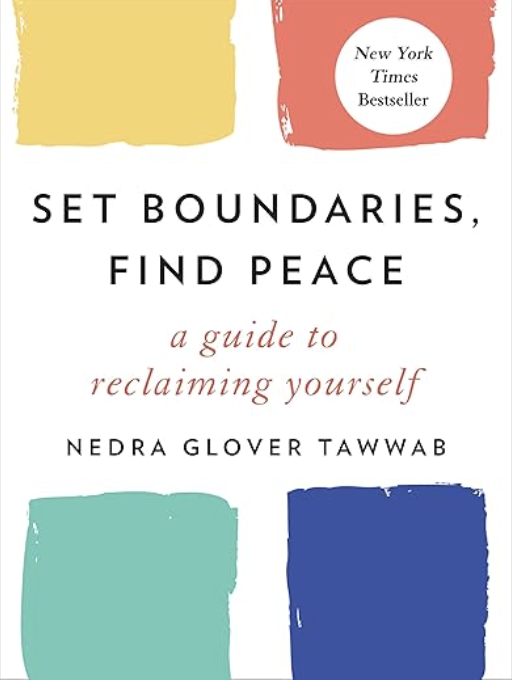
If you’d like to learn more about boundaries, and how to set them, check out this book here.
About the Author
This blog was written from a trauma-informed, psychodynamic, and somatic perspective by a California-based Associate Marriage and Family Therapist offering telehealth therapy to adults across the state.
Disclosure: As an advocate for your mental well-being, I only recommend tools and texts I’ve personally vetted. Some links in this post are affiliate links, meaning I earn a small commission on qualifying purchases. This helps support the creation of high-level content for high-achievers like you.